
And the blood panel every endurance athlete should get
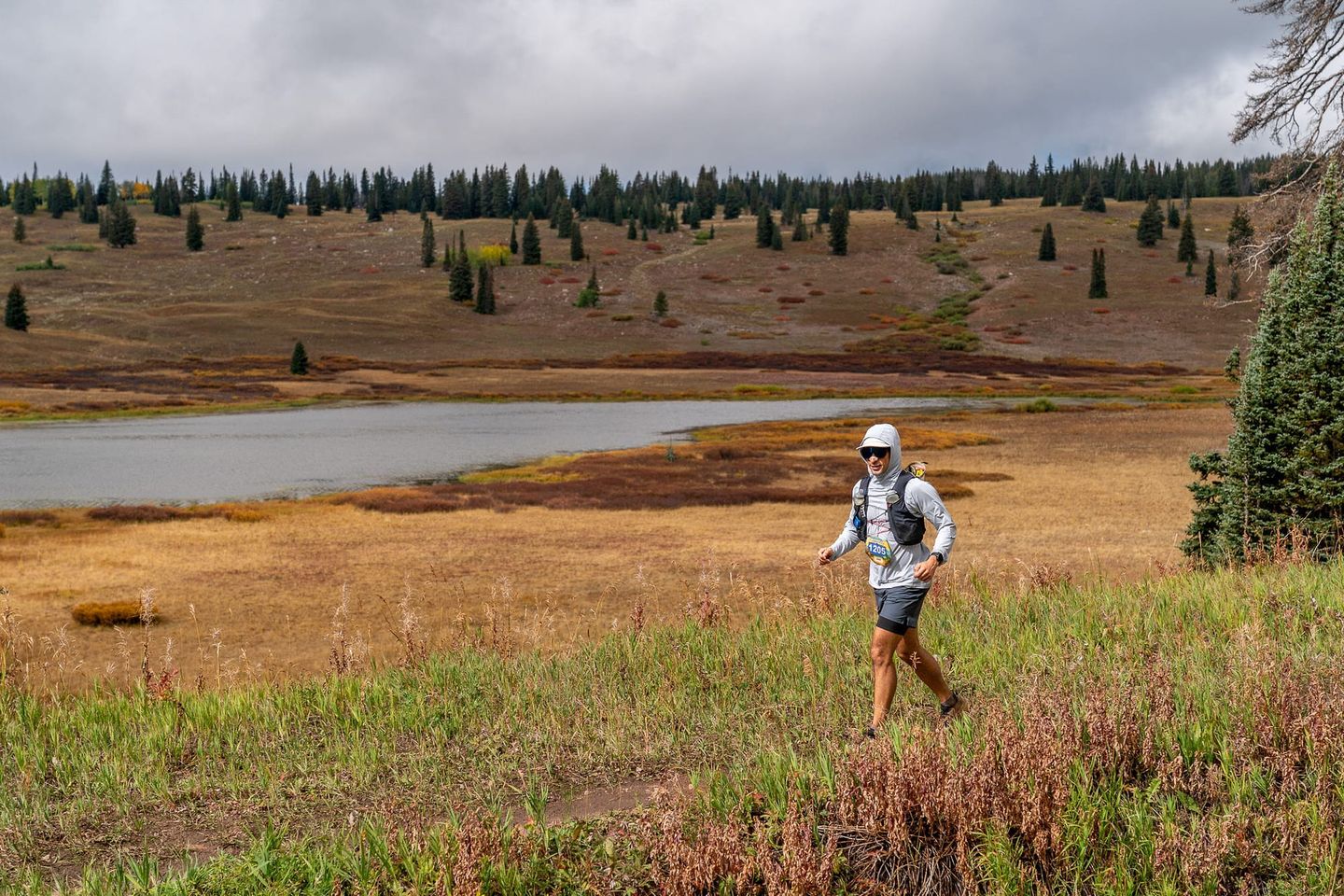
In September I ran the Run Rabbit Run 50 in Steamboat Springs. It was my first race of any kind. Your boy here had never even done a turkey trot.
It was a good time: Fifty miles, 8,500 feet of climbing, high elevation, hail and downpours throughout. Check out the full race story here.
What I didn't write about in that piece is what was happening under the hood and how the training impacted my body and health.
I've spent most of my life doing long days in the mountains: skiing, scrambling, hiking, and mountain biking. I also have a strong background in strength training but I had never done real structured endurance training. I was curious to see how my body handled it.
We’ll dive into what happened to my biomarkers and the blood tests that are most critical for athletes.
Tanked Testosterone Blues
On May 1st, at the very start of my journey of adding more training volume but months before real structured training started, I got a blood draw. My total testosterone came back at 452 ng/dL. That's the lowest number I've ever seen by a wide margin and had me questioning everything. This was taken 5 days into a small deload and worrying considering I had not even started my training plan. Plus we all know more testosterone makes more of a man . We’ll dive later into why this mindset is not based on the research.
What made this result more impactful is that I also started noticing lower energy, worse sleep, and an overall malaise and flatness that was new and no fun.
I had planned to test again at the end of my main block, during my pre-race taper, to see how my HPG axis was functioning. I canceled the test.
By then I was beat up from the real training, and I know myself well enough to know that a really low number would do me no favors, even if interesting data.
My testosterone wasn't going to change how I showed up on race day and a bad reading would just give me one more thing to worry about so I pushed the draw to about a month after the race to see how I recovered instead. I’ll never know where my testosterone was ending those peak training weeks but I would guess it was very low.
Knowing how you'll react to data is its own kind of wisdom. More data isn't better data if it only feeds anxiety and doesn't change training or a decision.
The Numbers
Here's what I can compare across three draws from the same lab: a December baseline before training started, May 1 early in the block, and October 20, about four weeks after the race.
A few things jump out.
- Testosterone came back, and then some. 756 is back near my normal peak levels.
- Cortisol came down after the race, which is what you'd hope to see once the training load decreases.
- Hemoglobin and hematocrit crept up. An effect of all my training.
- ALT went up from my old normal of 17–20. That looks worrying on paper but we'll get to why this is not a concern and better tests for liver health with a high training load.
What I Did About It
When I saw my total testosterone results early on in the training block I decided to make some changes to protect my hormones as I continued to ramp volume and get ready for 50 miles of mountain running.
Fueling
The first thing I did to help my hormones was fix my fueling. I used to have maybe 30-40 grams of carbs per hour via a couple bars here and there but the research had me praying at the altar of high carb fueling [7]. By race day I was at 100–120 grams an hour on hard efforts.
Low energy availability tanks testosterone and proper fueling tells the body everything is ok and it does not have to go into survival mode.
Here's what my fueling looked like by the end of the block:
- ~60 grams of carbs before training, usually about 60–90 min pre session when possible
- 60–120 grams of carbs an hour during workouts, depending on the session.
- Protein post session, plus some easy-to-digest carbs.
- Enough protein every day, which isn't really fueling, but gives your body the amino acids to repair tissue from all that training load.
- Eating as much as I physically could on training days. I tracked intake from time to time, and tracked my weight at a macro level. It stayed stable the whole way.
This made the biggest change for my overall ability to absorb training volume while feeling good and enabled longer and more intense sessions. This was not a magic bullet and I still found myself overreached a few times. The stress from training, work, sleep, and life all stack on top of each other and you can’t out-eat a recovery deficit.
The science backs up going big on carbs. There is a ton of great research here but a couple of explanatory studies show:
- Hormones. Men doing three days of hard training on a low-carb diet (about 30% of calories) saw their free testosterone to cortisol ratio drop 43%. The group eating about 60% carbs barely moved [4].
- Output. Elite marathoners ran two hours near race pace while taking in 60, 90, or 120 grams of carbs an hour. At 120 g/hr their bodies burned more carbohydrate and their running economy improved, with about a 2.6% lower oxygen cost than at 60 g/hr [13].
- Recovery. Elite mountain runners were randomized to 60, 90, or 120 grams of carbs an hour during a mountain marathon with about 4,000 meters of climbing. The 120 g/hr group had the lowest muscle damage markers (CK, LDH, GOT) and the lowest perceived training load [6].
Total Testosterone Isn't the Panacea
After worrying about my total test the irony is that once I dug into the research testosterone being meaningful for outcomes and performance is much less meaningful than the internet may want you to believe.
One way to look at this is comparing men and women. Men have roughly 10 to 20 times more testosterone, yet when both sexes follow the same training program, they build muscle at similar relative rates [11]. Another large 2025 analysis of 29 studies found relative gains in muscle size were nearly identical [14].
You see the same thing among men. In a study of 67 young men doing 12 weeks of training, researchers sorted them into low, moderate, and high muscle-growth responders and tested a long list of biomarkers. Hormones are not what separated them, and even the best predictors explained only about 8–11% of who grew more [16].
I want to be clear that supraphysiologic doses of testosterone, like those taken by bodybuilders, help grow serious muscle and can have big impacts on physiology [15] but the natural ups and downs within one's normal range seem to not matter much.
Testosterone is like a check engine light vs. meaningful marker of performance. If you're well below your typical range and have symptoms, it's worth digging deeper. But being higher within the normal range (roughly 400–1,000 ng/dL) doesn't appear to buy you more muscle or strength.
High-volume training will often suppress testosterone so don’t panic at one test and trust your hormones to normalize when volume comes back down or recovery improves.
The Endurance Athlete Blood Panel
So what should you look for in terms of biomarkers as an athlete? Here are the markers I like to check for athletes.
I also have a custom panel for athletes on GoodLabs (Save $10 with this link) with the key markers I like to look at for athletes. This panel does not include all the tests mentioned below but meant to be a quarterly or biannual checkup and more detailed markers can be added for specific worries.
Energy availability markers
The first thing I want to check is one's energy availability as this is the thing that can tank hormones and lead to performance regressions and long term issues. Energy availability is how much energy is left over after training and relative energy deficiency in sport (REDs) is what happens when energy is less than needed to support life and training [1]. This can be common in endurance athletes.
Free T3/T4 and TSH. The thyroid is one of the first places your body pulls back when energy runs low. The thyroid is like a thermostat and turns down energy across the body when fuel runs low over time. Four days of low energy availability cut free T3 by 18%, regardless of how much or how hard people exercised [5].
Leptin. Leptin tracks energy intake and body fat, and it drops fast when you're under-fueled. In a study of low energy availability in men, T3, leptin, and IGF-1 all dropped while total testosterone held steady over the short term [3]. That suggests the thyroid and leptin signals tend to show up first. Leptin is also low in lean people and varies from person to person. My leptin was 0.5 post race which is low but near my baseline historically so do not take it as an under-fueling signal.
Total testosterone and SHBG. When energy availability in male endurance athletes is reduced, testosterone and T3 both go down [2]. Useful as a trend, not a single snapshot.
Cortisol. Context-dependent and noisy, but a consistently high morning cortisol next to the other markers is a flag.
Iron
Ferritin, transferrin saturation, and hemoglobin/hematocrit. Hard training spikes a hormone called hepcidin, which temporarily blocks iron absorption. Iron deficiency shows up in roughly 15–35% of female athlete groups and 5–11% of male ones [8]. The first stage of deficiency is defined as ferritin under 35 [8]. Ferritin also rises with inflammation, so read it alongside transferrin saturation.
The Misleading Markers
ALT and AST are referred to as liver enzymes but muscle has plenty of them too. In healthy men, AST and ALT stayed elevated for at least seven days after a single hard lifting session [9]. If worried about liver issues but not willing to take a break from training like me I like to order GGT as a tiebreaker. It does not rise with exercise but does with liver issues [10].
Creatinine. This rises with muscle mass and creatine use which can lead to concerns for people taking creatine or having more lean mass. This causes creatinine-based eGFR, the most common marker for kidney function, to look sub-optimal. However, cystatin C–based eGFR is a better marker. If this may be a concern for you get a cystatin C test and eGFR using cystatin C instead of creatinine. It's also a more sensitive marker.
The basics
None of these are super athlete specific, but they're the foundation of overall health, and a gap in any of them can quietly cap your training, recovery, and performance.
- Vitamin D – Supports bone health, muscle function, and immunity. Low levels are common in athletes, especially in winter, and raise stress fracture risk.
- RBC magnesium – Key for energy production and muscle and nerve function, and you lose it in sweat. RBC magnesium reflects your stores better than standard serum magnesium.
- Sodium – Your main sweat electrolyte. A baseline helps you understand your hydration and electrolyte balance.
- Metabolic markers (fasting glucose, insulin, HbA1c) – How well you handle blood sugar. Very low fasting insulin is normal in fit athletes, and HbA1c can read lower than your true average because endurance athletes turn over red blood cells faster.
- hs-CRP – Your low-grade inflammation status. Hard sessions spike it temporarily, so test rested.
- CBC – Your red and white blood cells and hemoglobin. It flags anemia, oxygen-carrying capacity issues, and immune problems.
For Women: Read This Twice
Women are more likely to have low energy availability and iron deficiency so female athletes should pay even closer attention to these markers.
- Your cycle is your earliest warning system. A missing or irregular period is the sign of your body pulling back on non-essential functions to save energy.
- Iron deficiency is far more common. Periods plus training make it a real risk [8].
- Bone is on the line. Low energy availability throws off bone turnover (more breakdown, less building), increasing the risk of stress fractures and long-term bone loss [12].
When and How to Test
- Get a baseline before your training block.
- Get a recovery draw about 3–4 weeks after your race.
- Only test mid-block if it will change a decision or inform training decision, like checking iron or thyroid when symptoms show up.
- Keep conditions consistent: same lab, same time of day, fasted, same training load leading up to test.
- Skip hard training for 48+ hours before a draw. Otherwise ALT, AST, and creatinine will read high and send you down a rabbit hole.
- Log any supplements so you can make sense of the numbers later.
- Track symptoms alongside your labs: energy, libido, sleep, mood, resting heart rate, and performance. Often they're louder than any lab result.
Thanks for reading and I'm not a doctor, and none of this is medical advice. Talk to yours about this and ideally find one who understands athletes.
For blood testing I really love and personally use GoodLabs. They have best prices, ability to customize panels, UI, and an awesome mission to democratize health with offering free blood testing when donating blood.
Also for anyone helping make sense of your own bloodwork check out KestrelReport where you can get deep human done analysis of bloodwork for health or performance goals.
Sources
- Mountjoy M, et al. 2023 International Olympic Committee's (IOC) consensus statement on Relative Energy Deficiency in Sport (REDs). British Journal of Sports Medicine, 2023.
- Jurov I, Keay N, Rauter S. Reducing energy availability in male endurance athletes: a randomized trial with a three-step energy reduction. Journal of the International Society of Sports Nutrition, 2022.
- Taylor HL. Patterns of energy availability in free-living athletes and the physiological effects of controlled low energy availability in males. Doctoral thesis, Liverpool John Moores University, 2024.
- Lane AR, et al. Influence of dietary carbohydrate intake on the free testosterone: cortisol ratio responses to short-term intensive exercise training. European Journal of Applied Physiology, 2010.
- Loucks AB, Callister R. Induction and prevention of low-T3 syndrome in exercising women. American Journal of Physiology, 1993.
- Viribay A, et al. Effects of 120 g/h of carbohydrates intake during a mountain marathon on exercise-induced muscle damage in elite runners. Nutrients, 2020.
- Thomas DT, Erdman KA, Burke LM. Nutrition and Athletic Performance: joint position statement of the Academy of Nutrition and Dietetics, Dietitians of Canada, and the American College of Sports Medicine. Medicine & Science in Sports & Exercise, 2016.
- Sim M, et al. Iron considerations for the athlete: a narrative review. European Journal of Applied Physiology, 2019.
- Pettersson J, et al. Muscular exercise can cause highly pathological liver function tests in healthy men. British Journal of Clinical Pharmacology, 2008.
- Tackett J, Reynolds AS, Dickerman RD. Enzyme elevations with muscle injury: know what to look for! British Journal of Clinical Pharmacology, 2008.
- Roberts BM, Nuckols G, Krieger JW. Sex differences in resistance training: a systematic review and meta-analysis. Journal of Strength and Conditioning Research, 2020.
- Loucks AB. The Female Athlete Triad: A Metabolic Phenomenon. Pensar en Movimiento.
- Ravikanti S, et al. 13C labelled glucose-fructose show greater exogenous and whole-body CHO oxidation and lower O2 cost of running at 120 vs 60 & 90 g/h in elite male marathoners. Journal of Applied Physiology, 2025.
- Refalo MC, Nuckols G, Galpin AJ, et al. Sex differences in absolute and relative changes in muscle size following resistance training in healthy adults: a systematic review with Bayesian meta-analysis. PeerJ, 2025.
- Bhasin S, et al. The effects of supraphysiologic doses of testosterone on muscle size and strength in normal men. New England Journal of Medicine, 1996.
- Mobley CB, et al. Biomarkers associated with low, moderate, and high vastus lateralis muscle hypertrophy following 12 weeks of resistance training. PLoS One, 2018.